
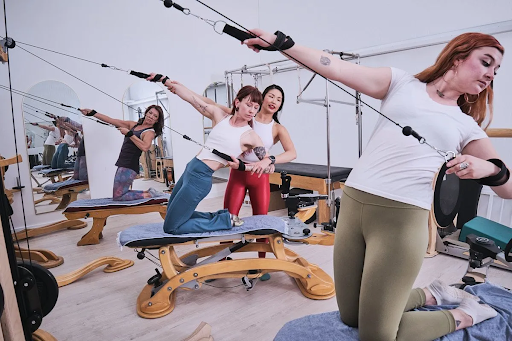
Movement practices that improve strength, flexibility, and coordination without placing unnecessary stress on the joints have become increasingly popular. Among these approaches, the trio gyrotonic tower format offers a unique experience by combining guided instruction with small-group learning. Rather than focusing solely on isolated muscles, this method encourages the body to move through fluid, multidirectional patterns that improve mobility, posture, and overall body awareness.
Unlike large fitness classes where individual guidance may be limited, trio sessions create a balanced environment that allows participants to receive personalized attention while benefiting from the motivation of practicing alongside others.
What Is a Gyrotonic Tower?
A Gyrotonic Tower is a specialized piece of equipment designed to support smooth, circular, and spiral-based movements. It uses adjustable pulleys, weighted resistance, and handles that allow the body to move through a wide range of motion while maintaining control.
The equipment supports exercises that encourage natural joint movement rather than repetitive linear motions. As a result, participants can work on flexibility, balance, strength, and coordination in a way that feels fluid instead of restrictive.
The tower can be adapted to different fitness levels, making it suitable for beginners as well as experienced practitioners.
Why Small-Group Training Makes a Difference
A trio gyrotonic tower class is typically limited to three participants, creating a learning environment that offers several advantages.
With fewer people in each session, instructors can provide detailed guidance on posture, breathing, and movement quality. Small corrections help participants develop better movement habits while reducing the risk of improper technique.
Training with a small group also creates a supportive atmosphere where individuals can stay motivated without feeling overwhelmed by a large class setting. Many people find that this balance of personal attention and shared experience makes learning more enjoyable.
Benefits for Mobility and Flexibility
One of the primary goals of Gyrotonic exercise is improving mobility throughout the entire body. The continuous, flowing movements encourage joints to move through their natural ranges while engaging muscles in a coordinated manner.
Regular practice may help:
- Increase spinal mobility
- Improve shoulder and hip flexibility
- Enhance joint stability
- Support smoother everyday movement
- Reduce stiffness caused by prolonged sitting
Rather than stretching isolated muscles, the exercises connect multiple parts of the body into integrated movement patterns.
Developing Functional Strength
Strength gained through Gyrotonic training differs from traditional resistance exercises because it emphasizes movement quality along with muscular engagement.
The trio gyrotonic tower allows participants to perform controlled exercises using adjustable resistance that challenges the body without excessive impact. The movements often involve the core, arms, legs, and back working together instead of isolating a single muscle group.
This integrated approach helps build functional strength that supports daily activities such as lifting, bending, reaching, and maintaining better posture.
Improved Coordination and Body Awareness
Many Gyrotonic exercises combine breathing, rhythm, and coordinated movement patterns. This encourages participants to become more aware of how different parts of the body work together.
Improved body awareness can contribute to:
- Better balance
- Enhanced coordination
- More efficient movement patterns
- Increased postural control
- Greater confidence during physical activity
These improvements often extend beyond exercise sessions and become noticeable during everyday movements.
Suitable for Different Fitness Levels
One of the strengths of Gyrotonic training is its adaptability. Exercises can be modified based on an individual’s mobility, strength, experience, and movement goals.
Whether someone is beginning a structured movement practice or looking to complement an existing fitness routine, instructors can adjust resistance, range of motion, and exercise complexity to suit different needs.
Because of this flexibility, small-group sessions often include participants with varying experience levels while still allowing everyone to progress safely.
What to Expect During a Session
A typical class usually begins with gentle mobility exercises and breathing techniques to prepare the body for movement. Participants then progress through a series of guided exercises using the tower’s pulleys and resistance system.
Throughout the session, movements flow continuously from one exercise to the next, promoting coordination and efficient muscle engagement. Instructors provide ongoing feedback to help participants maintain proper alignment and movement quality.
The session generally concludes with movements that encourage relaxation and improved mobility, leaving many participants feeling both energized and refreshed.
Conclusion
Choosing a movement practice that supports strength, flexibility, coordination, and body awareness can provide long-term benefits for people of many fitness levels. Small-group instruction offers the opportunity to receive personalized guidance while enjoying the motivation of training alongside others. If you’re interested in exploring the benefits of The Movement Temple, working with experienced instructors in a supportive environment can be an excellent way to build confidence and develop healthier movement patterns through Gyrotonic training.