
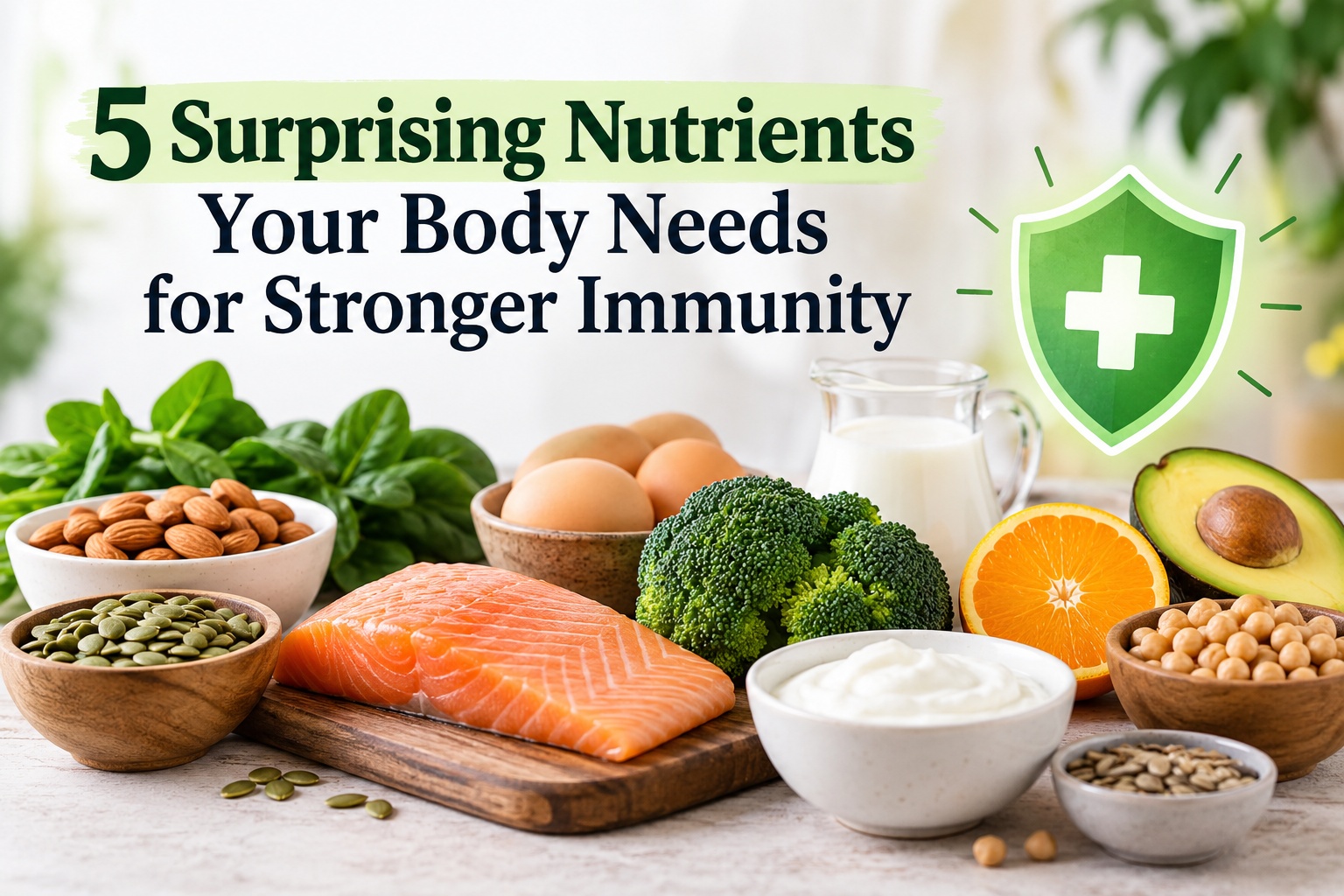
When people talk about supporting immunity, the conversation usually goes straight to vitamin C.
Oranges, amla, lemon water and supplements get most of the attention.
But your immune system needs much more than one vitamin.

Your body uses several nutrients to build and maintain immune cells, support normal immune responses and keep different parts of the immune system working properly. If your everyday diet lacks some of these nutrients, your immune health may be affected.
This does not mean you need expensive supplements or a cupboard full of pills.
In many cases, you can get important nutrients from ordinary foods such as eggs, lentils, nuts, seeds, vegetables, dairy foods and fish.
So, which nutrients deserve more attention?
Here are five that are easy to overlook.
What Does Nutrition Have to Do With Immunity?
Your immune system is made up of cells, tissues and organs that work together to protect your body.
Nutrition supports this system by providing the raw materials it needs.
Protein helps build immune-related cells and other body tissues. Vitamins and minerals support processes such as cell growth, antioxidant protection and normal immune responses.
This is why eating one “immunity-boosting” food is not enough.
Your overall eating pattern matters more.
A plate with protein, vegetables, whole grains, healthy fats and fruit will usually give you a wider range of nutrients than relying on one food or drink.
1. Zinc
Zinc does not get as much attention as vitamin C, but it plays an important role in normal immune function.
Your body needs zinc for many biological processes, including the development and function of immune cells.
Even though your body only needs zinc in relatively small amounts, consistently low intake can be a problem.
Foods That Contain Zinc
You can find zinc in:
- Pumpkin seeds
- Sesame seeds
- Chickpeas
- Lentils
- Dairy products
- Eggs
- Meat
- Shellfish
- Nuts
For a vegetarian meal, you could combine dal with seeds, vegetables and whole grains.
That is much more practical than trying to find a single “superfood.”
How Much Zinc Do You Need?
The recommended dietary allowance for adults varies by sex and life stage.
Adult men generally need around 11 mg per day, while adult women generally need around 8 mg per day.
Your needs can be different during pregnancy, breastfeeding and certain health conditions.
More is not always better. Very high zinc intake from supplements can interfere with copper absorption and cause other problems.
Food should usually be your first source unless a healthcare professional recommends supplementation.
2. Selenium
Selenium is another nutrient that often gets missed.
Your body needs selenium for enzymes involved in protecting cells from oxidative damage and for normal thyroid and immune function.
You do not need large amounts.
That is one reason selenium rarely becomes a headline nutrient.
Where Can You Get Selenium?
Food sources include:
- Eggs
- Fish
- Meat
- Dairy products
- Whole grains
- Sunflower seeds
- Some nuts
Brazil nuts are particularly rich in selenium, but their selenium content can vary considerably depending on where they were grown.
You do not need to eat large quantities.
A varied diet is a better approach than relying heavily on one food.
Why Does Selenium Matter for Immunity?
Your immune system produces reactive molecules as part of normal immune activity.
Selenium-dependent antioxidant systems help protect cells from oxidative damage.
This does not mean selenium prevents infections on its own.
Think of it as one small part of a much larger system.
3. Vitamin D
Vitamin D is often discussed in relation to bones, but it also has a role in normal immune function.
Your body can make vitamin D when skin is exposed to sunlight. You can also get it from certain foods and fortified products.
Yet vitamin D deficiency is common in many populations.
Foods That Provide Vitamin D
Dietary sources include:
- Fatty fish such as salmon and sardines
- Egg yolks
- Fortified milk
- Fortified plant-based drinks
- Some fortified cereals
The amount available from food depends on the product.
If you spend most of your time indoors or have other risk factors for deficiency, a healthcare professional may recommend checking your vitamin D status.
Can Vitamin D Prevent Every Infection?
No.
That is not a realistic way to look at it.
Vitamin D supports normal immune function, but taking more vitamin D does not automatically make your immune system stronger.
If you have a confirmed deficiency, correcting it may be useful. The right dose depends on your individual situation.
Avoid taking high-dose vitamin D supplements without professional guidance.
4. Vitamin B6
Vitamin B6 is another nutrient that rarely gets attention when people discuss immunity.
It helps your body carry out many reactions involved in protein metabolism and supports normal nervous and immune system function.
Because vitamin B6 is found in a range of foods, most people can get it through a varied diet.
Foods Rich in Vitamin B6
Good sources include:
- Chickpeas
- Potatoes
- Bananas
- Poultry
- Fish
- Eggs
- Fortified cereals
- Nuts and seeds
Chickpeas are especially useful for vegetarian diets.
You can add them to salads, make chana chaat, use them in curries or blend them into hummus.
Simple foods can cover a lot of nutritional ground.
What Happens If You Do Not Get Enough?
Severe vitamin B6 deficiency is uncommon, but inadequate intake can affect several body functions.
Your nutritional needs are not about one nutrient in isolation.
For example, eating a variety of legumes, vegetables, fruits, whole grains, dairy or alternatives, nuts and seeds gives your body access to several vitamins and minerals at the same time.
5. Protein
Protein may be the most overlooked “nutrient” when people talk about immunity.
People often focus on vitamins and forget that the immune system is made up largely of cells and proteins.
Your body needs adequate protein to build and repair tissues and support many normal body functions, including immune responses.
This is especially relevant if your diet is very restrictive or you frequently skip protein-rich foods.
How Much Protein Do You Need?
Protein requirements depend on factors such as body size, age, activity level, pregnancy status and health conditions.
Rather than following a single number from the internet, look at your complete diet.
Ask yourself:
Do you have a protein source at breakfast?
Do your lunch and dinner contain dal, beans, paneer, curd, eggs, fish, chicken or another protein source?
If the answer is usually no, your diet may need some attention.
Easy Indian Protein Sources
You do not need protein powders to improve every meal.
Try:
- Dal
- Rajma
- Chole
- Moong
- Paneer
- Curd
- Milk
- Eggs
- Fish
- Chicken
- Tofu
- Soy products
- Nuts and seeds
For example, a meal of dal, rice, vegetables and curd can provide a useful mix of protein, carbohydrates and other nutrients.

How to Build an Immunity-Supporting Plate
Knowing individual nutrients is useful.
But what do you actually do with that information?
Start with your plate.
A simple meal could contain:
Protein
Choose dal, beans, paneer, tofu, eggs, fish, chicken or curd.
Vegetables
Include two or more types when possible.
Try leafy greens, carrots, beans, capsicum, gourds, cauliflower or other seasonal vegetables.
Whole grains or other carbohydrates
Options include:
- Roti
- Brown rice
- Oats
- Millets
- Whole-grain bread
- Traditional rice varieties
Healthy fats
Add nuts, seeds or suitable cooking oils in reasonable amounts.
Fruit
Choose whole fruit instead of depending on fruit juice.
You do not need to make every meal perfect.
Look at what you eat across the whole day.
5 Simple Food Combinations for Better Nutrition
If you are not sure where to start, try these combinations.
1. Dal + vegetables + roti + curd
A simple Indian meal that gives you protein, fibre and several vitamins and minerals.
2. Chana salad + curd
Add cucumber, tomato, onion, lemon and herbs for an easy meal or snack.
3. Egg + vegetable breakfast
Try an omelette with vegetables and whole-grain toast.
4. Oats + nuts + seeds + fruit
This can be a convenient breakfast when you need something quick.
5. Fish + vegetables + rice
For people who eat fish, this combination can provide protein along with several important nutrients.
Foods That Are Often Overlooked
Sometimes the best nutrition advice is not about buying something new.
Look at what is already in your kitchen.
Pumpkin seeds can add zinc.
Chickpeas provide protein and vitamin B6.
Eggs provide several nutrients.
Curd adds protein and other nutrients.
Fish can provide vitamin D and selenium, depending on the type.
Nuts and seeds can add healthy fats and minerals.
You can build a nutrient-rich diet without making your meals complicated.
Can Food Alone Strengthen Your Immune System?
Food supports normal immune function, but no food can guarantee that you will not get sick.
Your immune health depends on more than diet.
Sleep, physical activity, stress, hygiene, vaccinations, medical conditions and other lifestyle factors also matter.
A healthy diet gives your body the nutrients it needs to function normally.
That is a much more realistic goal than searching for one food that “boosts” immunity overnight.
Common Nutrition Mistakes That Can Affect Your Diet
Relying on supplements instead of food
Supplements can be useful when there is a documented deficiency or a specific need.
But taking several supplements does not replace a varied diet.
Skipping protein
If breakfast is only tea and toast, lunch is mostly rice, and dinner contains very little protein, your overall intake may be lower than you think.
Eating very few vegetables
Vegetables provide fibre, vitamins, minerals and plant compounds that contribute to a varied diet.
Following restrictive diets without guidance
Cutting out several food groups can make it harder to meet your nutritional needs.
If you have a medical condition or follow a restricted diet, personalised advice can be useful.
When Should You Consult a Dietitian?
If you often feel tired, have a very restricted diet, have a known nutrient deficiency or simply do not know how to balance your meals, speaking with a qualified professional can help.
A Dietitian in Bangalore can review your current eating pattern and suggest changes based on your health needs, food preferences and lifestyle.
This is different from copying a generic diet chart from social media.
Your diet should fit your routine.
If you work long hours, your plan needs to account for that.
If you eat mostly vegetarian food, your protein sources need to reflect that.
If you have a medical condition, the advice should take that into account too.
Frequently Asked Questions
- Which nutrients are important for immune health?
Several nutrients support normal immune function. These include zinc, selenium, vitamin D, vitamin B6 and protein. Vitamins A, C and E, iron, folate and other nutrients also play roles in maintaining normal body functions.
- Is zinc good for immunity?
Zinc is needed for normal immune function. Foods such as pumpkin seeds, chickpeas, lentils, dairy products, eggs and meat can provide zinc.
- Can vitamin D support the immune system?
Vitamin D has a role in normal immune function. If you have low vitamin D levels, a healthcare professional can advise you about appropriate supplementation.
- Which Indian foods are good sources of protein?
Dal, rajma, chole, moong, paneer, curd, milk, tofu, soy foods and eggs are useful options. Fish and chicken are also protein-rich choices for people who eat animal foods.
- Can food prevent infections?
No single food can prevent infections. A balanced diet supports normal immune function, while infection risk also depends on factors such as exposure, vaccination, hygiene and overall health.
A Practical Way to Start
Do not try to change everything tomorrow.
Start with your next meal.
Add a protein source.
Include a vegetable.
Choose a whole-food carbohydrate.
Add some nuts or seeds when appropriate.
Have fruit during the day.
Then look at your meals over the next few days.
Are you getting enough variety?
Are you regularly skipping meals?
Are you relying heavily on packaged foods?
Are your meals mostly carbohydrates with very little protein?
These questions can tell you much more about your diet than simply counting how many “immunity foods” you eat.
Your immune system needs a steady supply of nutrients, not one miracle ingredient.
A varied diet built around everyday foods is a much more practical place to start.