

Hallux Valgus is one of the most common foot deformities worldwide, affecting millions of individuals, particularly as they age. Often referred to simply as a “bunion,” this condition is far more than just a cosmetic bump on the side of the foot; it is a progressive structural shift of the bones in the forefoot that can lead to chronic pain, mobility issues, and a significantly decreased quality of life.
In this comprehensive guide, we will explore everything you need to know about Hallux Valgus—from the biological mechanics of why it occurs to the modern non-surgical interventions that can help you avoid the operating table.

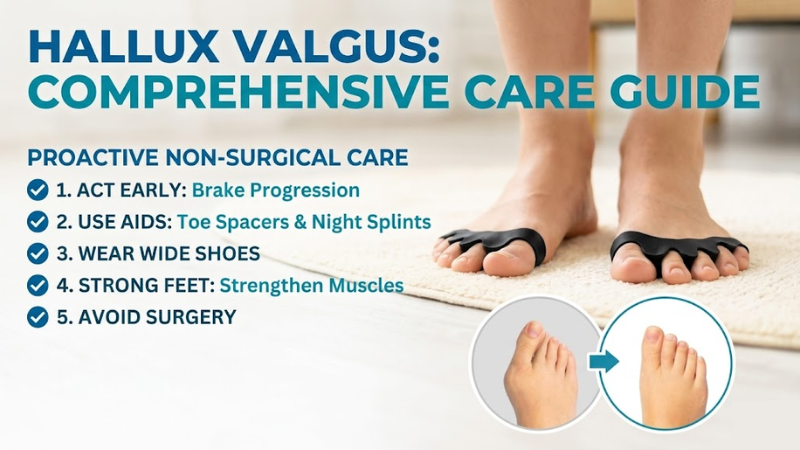
What Exactly is Hallux Valgus?
The term “Hallux Valgus” is derived from Latin: Hallux meaning “great toe” and Valgus meaning “turned away from the midline.” Clinically, it describes a condition where the big toe (stortån) begins to lean inward toward the second toe.
As the big toe shifts, the base of the toe—the first metatarsal bone—moves outward. This misalignment creates a bony prominence or “bump” on the inner edge of the foot. While many people believe a bunion is an overgrowth of bone, it is actually a dislocation of the joint (the metatarsophalangeal or MTP joint).
The Progression of the Deformity
Hallux Valgus is a progressive condition. It usually begins with a slight leaning of the big toe, which might not cause much pain initially. However, over years of walking and wearing restrictive footwear, the angle increases. Eventually, the big toe may overlap or dive under the second toe, leading to secondary issues like hammertoes, corns, and calluses.
Common Symptoms and Red Flags
Recognizing the signs of Hallux Valgus early is crucial for effective management. If you notice any of the following, it may be time to consult an orthopedist or invest in supportive care:
- The Bony Bump: A visible protrusion on the inside of the foot at the base of the big toe.
- Pain and Tenderness: A dull ache or sharp pain in the joint, especially after long periods of standing or walking.
- Inflammation: Redness, swelling, or soreness around the big toe joint.
- Calluses and Corns: These often develop where the first and second toes overlap or where the bunion rubs against the inside of a shoe.
- Limited Mobility: Difficulty moving the big toe, which can affect your balance and gait.
- Widening of the Forefoot: As the metatarsal bone moves outward, your foot becomes wider, making it increasingly difficult to find comfortable shoes.
Why Do Bunions Form? (Causes and Risk Factors)
There is a common misconception that high heels are the sole cause of bunions. While footwear plays a significant role, the reality is a combination of genetics and lifestyle.
Genetics and Foot Structure
If your parents or grandparents suffered from Hallux Valgus, you are at a higher risk. This is because you inherit your foot type—such as flat feet (pes planus), low arches, or hypermobile ligaments—which predisposes the joint to shift under pressure.
Footwear Choices
Shoes that are too tight, too narrow, or have a pointed toe box squeeze the toes into an unnatural position. High heels compound this by throwing the majority of the body’s weight forward onto the forefoot, accelerating the collapse of the joint.
Biomechanical Factors
- Overpronation: When the foot rolls inward excessively during walking, it puts extra pressure on the inner edge of the big toe.
- Inflammatory Conditions: Rheumatoid arthritis can lead to joint degradation that triggers Hallux Valgus.
- Occupational Stress: Jobs that require long hours of standing (nurses, teachers, retail workers) put constant strain on the MTP joint.
Non-Surgical Treatment: How to Manage Pain and Slow Progression
Most cases of Hallux Valgus do not require surgery if caught in the mild to moderate stages. The goal of non-surgical treatment is two-fold: relieving pain and realigning the foot to prevent the deformity from worsening.
Toe Spacers and Separators (Tåspridare)
Toe spacers are made of soft, medical-grade silicone and are placed between the big toe and the second toe. They physically push the hallux back into a straighter alignment.
- Benefits: They reduce the “crowding” of toes and take the pressure off the bunion during the day.
- Types: Some are simple silicone plugs, while others include a protective “shield” that covers the bunion itself to prevent friction against shoes.
Night Splints (Nattskenor)
While toe spacers are for active use, night splints are designed for rest. These adjustable braces hold the big toe in a straight position while you sleep. By providing a low-intensity stretch over several hours, they help maintain joint flexibility and reduce morning stiffness.
Orthopedic Insoles (Skoinlägg)
Since many bunions are caused by poor foot mechanics (like flat feet), orthopedic insoles are essential. They support the longitudinal and transverse arches, redistributing weight away from the big toe joint and toward the center of the foot.
Exercise and Physical Therapy
Strengthening the intrinsic muscles of the foot can help stabilize the joint. Simple exercises include:
- Towel Curls: Using your toes to scrunch up a towel on the floor.
- Toe Splaying: Trying to spread your toes apart without using your hands.
- Big Toe Lifts: Keeping the four smaller toes on the ground while lifting only the big toe.
Choosing the Right Footwear
The most effective “medicine” for Hallux Valgus is a change in footwear. If you continue to wear shoes that pinch the toes, no amount of bracing will stop the progression.

What to look for in a shoe:
- Wide Toe Box: The front of the shoe should be wide enough that you can wiggle your toes freely.
- Soft Materials: Look for leather or mesh that can stretch over the bunion rather than stiff synthetic materials.
- Low Heels: Keep heels under 2cm to ensure even weight distribution.
- Arch Support: Ensure the shoe has built-in support or enough room for a custom insole.
When is Surgery Necessary?
Surgery is typically considered the “last resort.” If your pain is so severe that it prevents you from performing daily activities, or if the big toe has moved so far that it is causing severe deformity in the other toes, an orthopedic surgeon may suggest a Bunionectomy.
There are over 100 different surgical procedures for Hallux Valgus, ranging from “shaving the bump” to cutting and realigning the bone (Osteotomy). Recovery can take anywhere from 6 weeks to 6 months, which is why non-surgical management via high-quality orthopedic products is always recommended first.
Preventing Hallux Valgus: Tips for the Future
Even if you don’t currently have pain, if you see the beginnings of a shift, take action now:
- Check your shoe size regularly: Foot size can change as we age or during pregnancy.
- Walk barefoot: When safe, walking barefoot on natural surfaces like sand or grass strengthens the feet.
- Use preventive spacers: If you know you have to wear tight shoes for an event, use a gel protector to minimize the damage.
FAQ’s
Can physical therapy exercises alone fix a bunion?
Exercises strengthen foot muscles and improve joint mobility, but they cannot physically realign bones that have already shifted permanently.
Is it safe to continue running with Hallux Valgus?
Running is safe if you use wide shoes and protective padding to minimize joint friction and excessive forefoot pressure.
Do bunions always cause pain in every patient?
Some bunions remain painless for years, but the progressive structural shift eventually causes discomfort and affects overall walking balance.
Can specialized socks help with Hallux Valgus pain?
Socks with internal gel padding or toe separation reduce painful friction and provide gentle alignment during daily physical activities.
Are women more prone to developing foot bunions?
Women are significantly more prone to bunions due to hormonal ligament laxity and historically restrictive or narrow footwear choices.
When should I seek professional medical advice for foot pain?
You should consult a specialist if foot pain interferes with daily activities or if you notice severe joint redness.
Can bunions occur in children or teenagers?
Yes, pediatric bunions are usually hereditary and often require early intervention with arch supports to prevent worsening over time.
What is the best way to reduce acute bunion swelling?
Applying ice for fifteen minutes can reduce acute inflammation and swelling after long periods of standing or physical activity.
Will using arch supports help my big toe alignment?
Quality insoles provide essential arch support which redistributes weight and reduces the heavy mechanical stress placed on your joint.
Conclusion
Hallux Valgus is a manageable condition, but it requires proactive care. By understanding the mechanics of your feet and utilizing tools like toe separators, night splints, and proper insoles, you can live a pain-free life and keep your feet healthy for years to come. Remember: your feet are the foundation of your entire body—treat them with the care they deserve.
For high-quality orthopedic supports and bunion care products, visit specialized providers like Ortopedbutiken to find the right solution for your specific needs.