
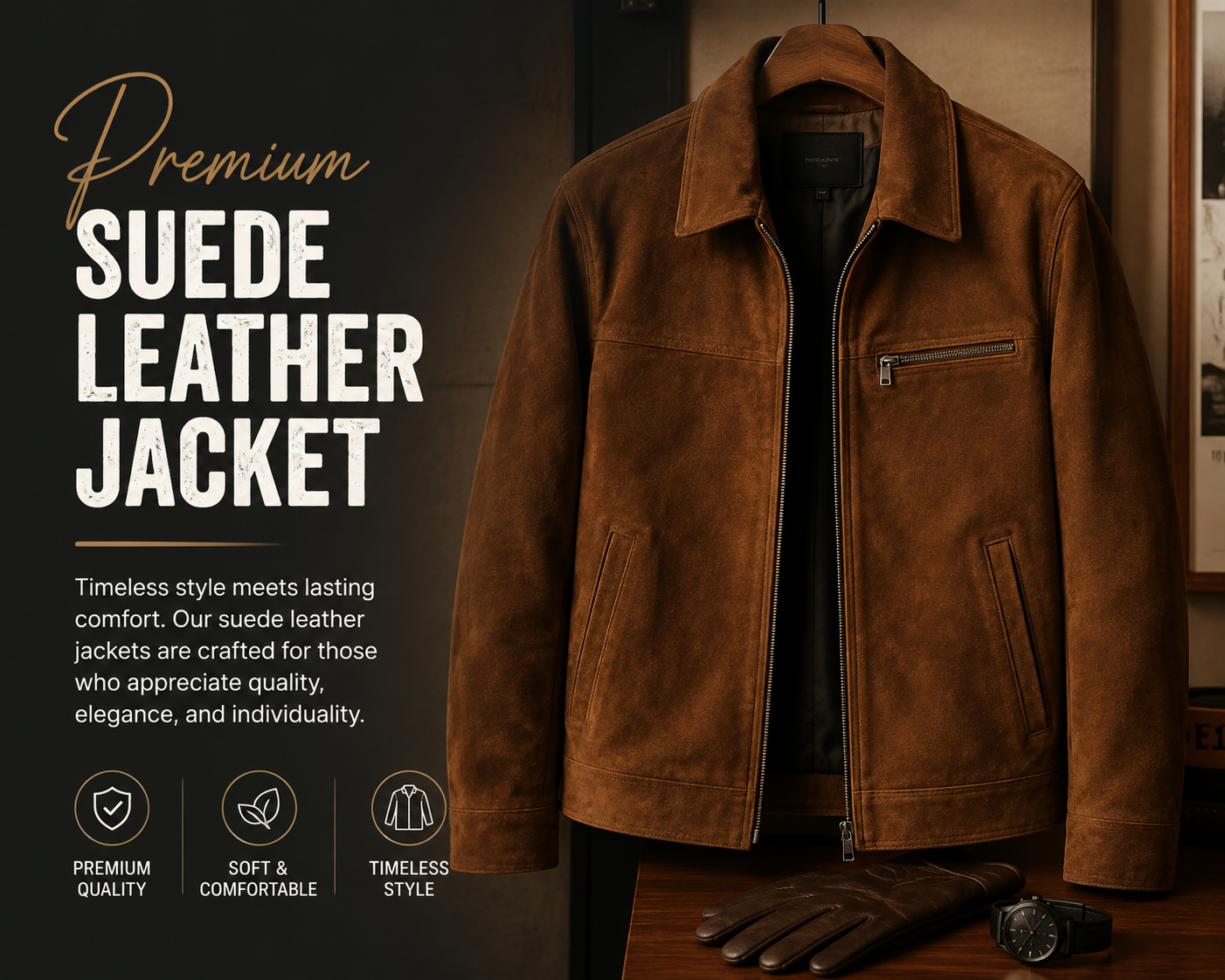
Suede Didn’t Soften Fashion. Fashion Finally Softened.
You can feel the difference before you even move. A leather jacket hits your shoulders with weight, an announcement. A suede leather jacket arrives like a conversation. The fabric doesn’t command the room. It invites you into it.
For decades, that softness was a liability. Fashion had a clear hierarchy: tough is better, hard is stronger, vulnerable is a mistake. A leather jacket with an edge. A suede jacket without one. The logic was simple and wrong.
Then something shifted. People stopped waiting for permission to take up space quietly. And suede, of all materials, became the thing that let them do it.

When Soft Became a Statement
Fashion doesn’t usually move this way. Trends tend to arrive with fanfare, with celebrity validators and a clear narrative about why now. Suede’s return was quieter. Someone wore a tan suede leather jacket to a dinner party in 2019. Then a designer sent one down a runway. Then it was everywhere, and nobody could quite name the moment it changed.
But there was a moment. You could feel it in how people stopped apologizing for the material’s reputation.
For years, the assumption was fixed: suede is fragile. It stains. It creases. It’s for display, not for living. A suede leather biker jacket was luxury that you touched carefully, if at all. The message was implicit: real toughness lives in full-grain cowhide. Suede is for people who want the look without the commitment.
That story held because it was partially true. Suede is softer. It does show dust. But the conclusion everyone drew was wrong. Softness isn’t fragility. And a suede jacket with suede understands that better than anything else in your closet.
The cultural shift was really about permission. Permission to want comfort alongside confidence. Permission to feel strong without looking armored. Permission to wear something that doesn’t announce your toughness before you open your mouth.
The Rise of Suede Leather Jackets
The timeline matters less than the why. But here’s what happened anyway.
In the 1960s, suede lived in two worlds. Rich people wore camel-tan suede coats to polo clubs. Musicians wore cracked black suede jackets because they were cheap and looked like rebellion. The same material, two completely opposite attitudes.
Then high fashion discovered what musicians already knew: suede photographs better than leather. It absorbs light. It has texture. A full-grain cowhide jacket can look generic on a runway. A suede leather jacket looks intentional.
By the early 2000s, designers like Tom Ford were building entire collections around suede. Not as a luxury material, but as an alternative to leather that felt more modern. Softer. Less aggressive. The language started to shift.
But awareness and adoption are different things. A lot of people knew suede existed. Fewer people actually wore it. The fragility myth had teeth.
The real acceleration happened in the last five years, and I think it’s connected to how we dress now. When you live between Zoom calls and coffee shops, you need clothes that work both places. A heavy leather jacket feels like cosplay. A suede leather jacket feels like you. That’s not nothing.
Add climate to that. Suede breathes differently than leather. For people in warm cities or uncertain seasons, a mens suede leather jacket started making practical sense. The material stopped being a luxury statement and became the smarter choice.
Suede Leather Jacket Styles People Actually Wear
The Classic Moto
A suede leather biker jacket in chocolate brown or camel. The shape is the Perfecto, but the material changes everything. Where leather reads as armor, suede reads as intention. This is the gateway suede jacket. Start here if you’re new to the material.
The Oversized Shirt Jacket
Suede in a loose, shirt-like cut. Usually in a neutral or warm tone. This is what people reach for on days when a fitted jacket feels too much. It layers. It moves. It’s less about the silhouette and more about the feeling.
The Suede and Leather Hybrid
Some jackets use both materials strategically. Suede on the body, leather on the sleeves and collar. This solves the fragility problem by putting durable leather in high-wear zones. A leather jacket with suede panels can feel like the best of both materials.
The Statement Color
A suede leather coat in burgundy, olive or rust. These aren’t neutral choices. They’re statements that your style lives in texture and mood, not shock value. When you wear this, you’re not trying to be tough. You’re trying to be felt.
The Lightweight Layer
Some suede jackets are thin enough to wear under a blazer or over a sweater. These work as transition pieces between seasons. They’re practical in a way that leather jackets with suede elements often aren’t, because suede breathes better.

How to Wear a Suede Leather Jacket
The first rule is this: stop thinking about it as intimidating.
- With simple basics. A suede leather jacket needs clean, quiet company. A white shirt, dark jeans, minimal jewelry.
- Over dresses. This is where suede shines. A black suede jacket over a midi dress, a floral slip dress, a simple linen shift. The softness of the jacket creates permission for the femininity below.
- Layered thoughtfully. A high-neck sweater, a slim turtleneck, a delicate silk camisole. Suede works best when you’re building texture through layers rather than through volume.
- With leather-bottoms. Yes, you can pair a suede jacket with leather pants or a leather skirt. The key is mixing suede jacket leather with a different leather finish. Matte suede, glossy leather. The contrast is intentional.
- With unexpected texture. Corduroy, linen, ribbed knit. Suede wants texture, not monotone.
Two things to avoid: oversaturating the outfit with too many materials, and pairing it with anything trying too hard. Suede is quiet. Your other clothes should be too.
Suede vs Full-Grain Leather: The Real Differences
This matters for your decision, so let’s be honest.
Suede is softer because the leather has been sanded and napped. That’s the texture you feel. It’s not weaker. It’s processed differently. A suede leather biker jacket won’t develop the dramatic patina of full-grain cowhide, because the surface is already textured. Instead, it deepens. It softens further. It becomes more itself over time.
Suede shows dust and light rain more than leather. This is true. But “shows” doesn’t mean “ruined.” A brush and a dry cloth fix most marks. A real stain is different. It happens, and when it does it’s permanent. But real stains on leather also don’t come out. You’re trading one vulnerability for another.
The weight difference is real. A mens suede leather jacket weighs less than a comparable leather jacket. If you carry weight in your shoulders or prefer freedom of movement, that matters. If you like the feeling of being held by a coat, leather is your material.
Why Suede Leather Fashion Became Viral
Three overlapping reasons, as I see it.
First, Instagram. Suede photographs like leather wishes it could. The texture catches light and reads as intentional and expensive even at middle price points. That aesthetic advantage meant more people wanted to wear it, and more visibility meant more wanting to wear it.
Second, the permission shift I mentioned. People stopped equating softness with weakness. A suede jacket lets you be strong in a way that doesn’t require armor. That’s not just fashion. That’s cultural.
Third, it works. Practically, it works for more bodies, more seasons, more moods than a standard leather jacket. Once people actually wore them instead of just looking at them, the adoption became unstoppable.
Best Colors and Care for Suede Jackets
Colors that work. Camel, chocolate brown, tan, black, olive green, oxblood. These are the safe picks that photograph well and pair easily. Lighter shades like cream and pale gray exist but demand more maintenance. Bolder colors like cobalt or hot pink are possible but need careful outfit planning.
Care that isn’t scary. Here’s the thing about suede: the actual care is simple. A soft brush removes dust and light dirt. A dry cloth handles most marks. Rain isn’t an immediate disaster. Let it dry naturally and brush again. Real spills, like wine or oil, need professional help. That’s true of leather too.
Buy a suede eraser and a brush. That’s it. You don’t need special sprays or protective treatments that change the hand of the material. Those are for people who buy suede and never wear it.
The Suede Leather Jacket Moment We’re In
In 2026, suede has stopped being an alternative and become a primary choice. Not because leather disappeared. Because softness stopped being a compromise.
You see it in how people move in suede jackets. They’re not protecting their investment. They’re living in them. That shift from precious object to actual garment is what makes a trend real.
A suede leather coat, a leather jacket with suede panels, or a simple suede leather jacket for men. Any of these are saying the same thing now. That you have permission to be soft. That confidence doesn’t require hardness. That feeling matters as much as looking.
Jacket Craze carries a range of suede pieces, from structured suede leather biker jackets to softer oversized options. The choice is yours. But the permission is already there.
FAQs
1. Is suede leather jacket good for everyday wear? Yes. A suede leather jacket is practical for everyday wear if you accept that it will show dust and light marks. These aren’t permanent damage. A brush handles most of them. Real spills or stains are rare if you’re not wearing it in extreme conditions.
2. Can I wear a suede leather jacket in the rain? Light rain is fine. Suede dries well if you let it air dry naturally and brush it afterward. Heavy rain or sitting in wet conditions for hours is harder on it. In very rainy climates, a leather jacket with suede panels is a smarter choice than pure suede.
3. How long does a suede leather jacket last? A good suede jacket lasts years with normal care. It may not develop the dramatic patina of full-grain leather, but it softens and deepens with wear. The material itself is durable. The appearance just evolves differently.