
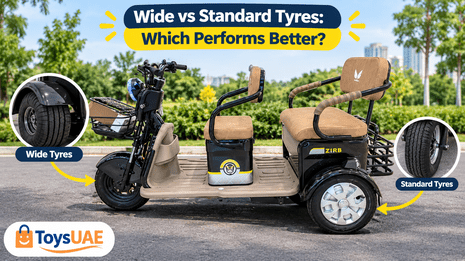
Electric trikes come with different tyre sizes and designs, and choosing the right ones can make a big difference to your riding experience. Some riders prefer wide tyres because they offer better grip and stability, while others choose standard tyres for easier movement and lower rolling resistance. Both options have their own benefits. Understanding these differences can help you select a model that suits your daily travel needs.
What Are Wide Tyres?
Wide tyres have a larger surface area and are generally thicker than standard tyres. They are designed to provide better contact with the road, which can improve grip and make the ride feel more stable.
These tyres are useful for riders who travel on different types of surfaces. They can handle small bumps, loose gravel, and uneven roads more comfortably, depending on their design and air pressure.

Some common benefits of wide tyres include:
- Better grip: Their wider contact area can provide good traction on suitable road surfaces.
- Improved stability: They can make the vehicle feel more planted, especially when turning at moderate speeds.
- Comfortable rides: Wider tyres with suitable pressure can help absorb small road bumps.
- More confidence: Riders may feel more comfortable when travelling on slightly rough surfaces.
However, wide tyres can also create more rolling resistance. This means the motor may need to work harder to keep the vehicle moving, depending on the tyre design and riding conditions.
What Are Standard Tyres?
Standard tyres are narrower and commonly found on many everyday three-wheeled vehicles. They are designed to provide a balance between comfort, efficiency, and easy handling.
Because they are usually lighter and have less rolling resistance, they can help the vehicle move smoothly on paved roads. They are a practical choice for people who mainly travel on streets, cycle paths, and other smooth surfaces.
Here are some important advantages:
- Easier movement: Narrower tyres can roll smoothly on well-maintained roads.
- Better efficiency: Lower rolling resistance may help reduce the energy needed to keep moving.
- Lightweight design: They may add less weight to the overall vehicle.
- Simple handling: Many riders find standard tyres easy to control during regular journeys.
One thing to remember is that standard tyres may provide less cushioning on rough roads, particularly when they are inflated too firmly.
Wide Tyres vs Standard Tyres: Main Differences
Both tyre types can work well, but their performance changes according to road conditions, tyre pressure, vehicle weight, and riding style.
1. Grip and Traction
Wide tyres generally offer a larger contact area, which can help provide better traction on loose or uneven surfaces. This can be useful when riding on gravel paths or roads with small stones.
Standard tyres also provide good grip on normal paved roads. Their performance depends on the rubber material, tread pattern, and tyre condition.
Better option: Wide tyres for many loose and uneven surfaces.
2. Comfort and Shock Absorption
Comfort is another important factor. Wide tyres can often be used at lower air pressure within their recommended limits, helping them absorb some road vibrations.
Standard tyres can also provide a comfortable ride, but their narrower design may transfer more vibration from rough roads.
The actual comfort level depends on tyre pressure, tyre construction, suspension, and seat design.
Better option: Wide tyres in many rough-road conditions.
3. Speed and Rolling Resistance
Standard tyres generally have an advantage when it comes to rolling resistance, especially on smooth and paved roads. They can require less effort from the motor to maintain movement.
Wide tyres may create more resistance, although modern tyre designs can reduce this difference.
Better option: Standard tyres for many smooth-road journeys.
4. Stability and Control
Wide tyres can make a vehicle feel more stable because of their larger contact area. This can be helpful when travelling at moderate speeds or moving over uneven ground.
However, stability also depends on the frame, wheel arrangement, centre of gravity, and weight distribution.
Standard tyres can provide reliable handling for regular road use when properly maintained.
Better option: Wide tyres for added confidence on suitable uneven surfaces.
5. Battery Consumption
Tyre choice can also affect battery performance. Wide tyres may increase rolling resistance, which can require more power from the motor. This may reduce the distance covered on a single charge.
Standard tyres may help improve energy efficiency on smooth roads because they often have lower rolling resistance.
However, battery capacity, rider weight, motor power, speed, terrain, and tyre pressure also affect the overall riding range.
Better option: Standard tyres may offer better efficiency on paved roads.
Which Tyres Are Better for Different Road Conditions?
Your regular riding environment should play an important role in your decision.
- Smooth city roads: Standard tyres are often a practical option because they offer easy movement and good efficiency.
- Uneven streets: Wide tyres can provide additional cushioning and grip.
- Gravel paths: Wide tyres with a suitable tread pattern may offer better traction.
- Long daily journeys: Standard tyres may help reduce rolling resistance and support efficient travel.
- Mixed road conditions: Choose tyres that offer a good balance of grip, comfort, and efficiency.
For an electric tricycle, choosing the correct tyre size and pressure is important for safe and comfortable travel. Always check the manufacturer’s recommendations before changing the tyre size or type.
How to Choose the Right Tyres for Your Vehicle
Before making a decision, think about how and where you will use your vehicle.
Consider your road conditions: If most of your journeys are on smooth roads, standard tyres may be enough. For frequent rides on rougher surfaces, wide tyres may be more suitable.
Check the weight capacity: Make sure the tyres can safely support the combined weight of the rider, vehicle, and any additional load.
Look at the tread pattern: A suitable tread design can improve grip and handling. The widest tyre is not always the best option.
Follow the recommended tyre pressure: Incorrect pressure can affect comfort, grip, battery use, and tyre life.
When comparing different models online, check the product specifications carefully. Look at tyre dimensions, load capacity, and the manufacturer’s recommended use before making a choice.
Final Thoughts
Wide and standard tyres both have useful features. Wide tyres are a good option for riders who want additional grip, comfort, and confidence on uneven surfaces. Standard tyres are often better suited to smooth roads, easy handling, and energy efficiency.
There is no single option that works best for everyone. The right choice depends on your daily routes, riding preferences, and the type of performance you expect from your vehicle. By comparing these features, you can make a more informed decision. You can also explore different vehicle options at ToysUAE and compare their specifications before choosing a suitable model.
Frequently Asked Questions (FAQs)
1. Are wide tyres better than standard tyres?
Wide tyres can provide better grip, cushioning, and stability on some uneven surfaces. Standard tyres are often more efficient on smooth roads. The better option depends on your riding conditions.
2. Do wide tyres reduce battery life?
They can affect battery consumption because some wide tyres create more rolling resistance. However, the actual impact depends on tyre construction, pressure, road conditions, and riding habits.
3. Are standard tyres suitable for rough roads?
Standard tyres can handle light uneven surfaces, but they may provide less cushioning than wide tyres. Always consider the tyre’s tread design and recommended use.
4. Do wide tyres make a vehicle slower?
Not necessarily. However, some wide tyres create more rolling resistance, which may require additional motor power. Their effect on speed depends on the tyre design and vehicle specifications.
5. Can I replace standard tyres with wide tyres?
It depends on the vehicle’s design. The frame, wheel clearance, brakes, and manufacturer’s specifications must support the new tyre size. Check compatibility before making any changes.

6. Which tyres are better for everyday use?
Standard tyres are often suitable for everyday travel on smooth roads. Wide tyres may be a better choice if your regular routes include gravel, uneven streets, or rough surfaces.








Leave a Reply