
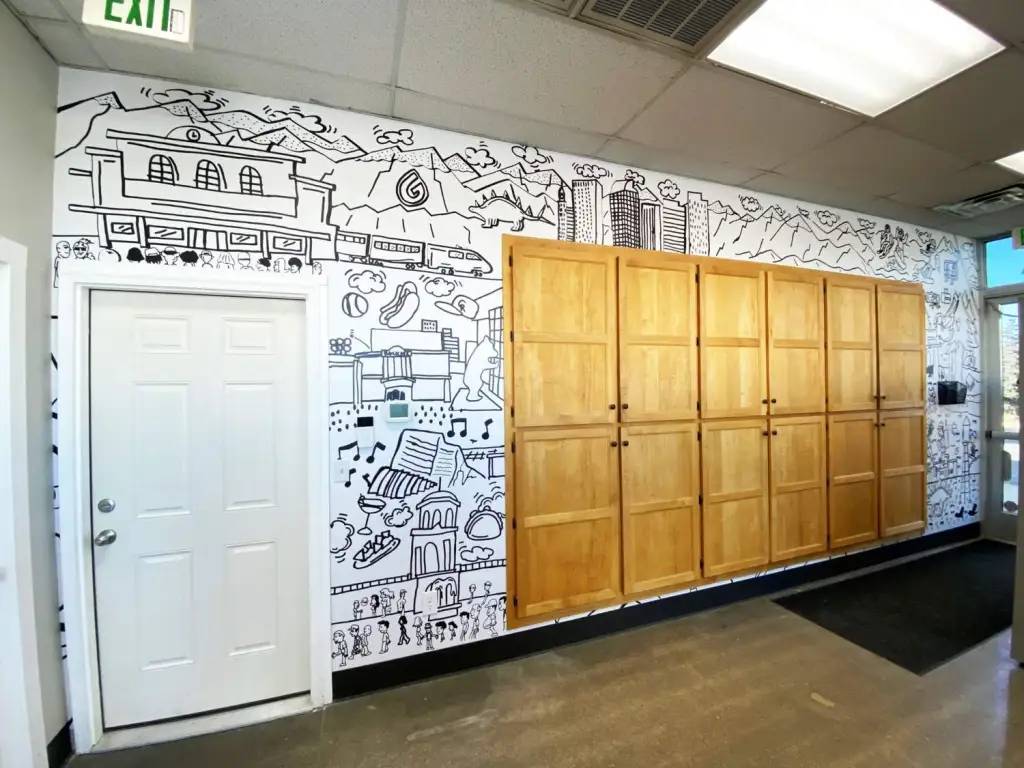
Introduction: Turning Morrison Road Walls into Stories of Westwood
In Denver’s Westwood neighborhood, visual identity is closely connected to local culture, independent businesses, and community expression. Along Morrison Road, restaurants, neighborhood retailers, service businesses, and community spaces have opportunities to use their physical environments to communicate more than a brand name. Thoughtfully designed wall murals can express a business’s history, celebrate its cultural influences, and strengthen its connection with the people who live and work nearby.
For businesses exploring Wall Murals in Denver, the goal should extend beyond adding color to an empty wall. A successful mural gives customers something meaningful to recognize, remember, and associate with a place. It might illustrate a restaurant’s culinary traditions, represent a family-owned shop’s history, or create a welcoming visual identity for a community organization.
Graphicworks Sign Company helps businesses consider how custom signage and visual graphics can support their physical spaces and brand identities. For businesses along Morrison Road and throughout Denver, custom wall murals offer a practical way to combine visual communication with place-based storytelling.

The most effective projects begin with a clear understanding of the people, stories, and surroundings the artwork is intended to represent.
Why Morrison Road Is a Distinctive Setting for Custom Wall Murals
Morrison Road runs through Westwood, a southwest Denver neighborhood known for its strong cultural identity, independent businesses, and community-led creative activity. The area’s restaurants, shops, and gathering spaces contribute to a commercial environment where personal connections and neighborhood recognition matter.
In this setting, a generic decorative mural may create visual interest, but artwork connected to a business’s actual identity can communicate much more.
Consider three examples:
- A family-owned restaurant could feature illustrations inspired by its regional cuisine, traditional ingredients, family recipes, or the story behind its name.
- An independent retail store could develop a mural around its products, founding story, or the people who make the business distinctive.
- A community organization could commission artwork that reflects neighborhood experiences, shared aspirations, local history, or the activities it supports.
These examples demonstrate how murals can connect a physical space with its intended audience. Rather than relying on broad cultural symbols or stock imagery, businesses can develop concepts grounded in their own histories and relationships.
For commercial properties along Morrison Road, this approach can also help distinguish neighboring businesses without making every storefront compete through oversized logos or promotional messages.
How Wall Murals Can Strengthen Business Identity in Denver
A wall mural can serve as a visual extension of a business’s brand. Unlike a conventional sign that primarily identifies a company, a mural can communicate atmosphere, values, products, and personality through a larger composition.
Restaurants and Cafés: Expressing Food, Heritage, and Hospitality
Restaurants often have stories that extend beyond their menus. Their identity may be shaped by family traditions, regional cooking, locally familiar ingredients, or the experience they want customers to have when they enter.
A custom mural can translate these elements into a visual environment. For example, a restaurant might use illustrated ingredients, landscape references, traditional patterns, or a narrative composition that reflects the origins of its cuisine.
The design should feel connected to the restaurant rather than relying on generic imagery associated with a broad culture. Consultation with owners, staff, and relevant community members can help ensure that the visual concept accurately represents the business.
A mural can also create a recognizable backdrop for customer photographs and social media posts. However, its long-term value should not depend entirely on photographs or trends. The artwork should make sense within the restaurant’s atmosphere and remain relevant as menus and promotional campaigns change.
Independent Retailers: Turning Business History into Visual Storytelling
Independent businesses can use wall murals to explain what makes them different from larger chains. A mural might depict a product-making process, illustrate the founder’s journey, or combine recognizable brand elements with references to the surrounding neighborhood.
For a shop along Morrison Road, this could mean developing a composition that reflects the owner’s personal story and the products the business actually sells.
The design can also help organize the customer experience. A mural placed behind a checkout counter, along a main customer pathway, or near a product display can establish a visual focal point without replacing practical signs that communicate hours, services, or directions.
Community Organizations: Creating Shared Visual Spaces
Community centers, nonprofit organizations, cultural spaces, and neighborhood gathering places have different needs from retail businesses. Their murals may represent multiple perspectives rather than one commercial identity.
A collaborative project could include input from staff, local artists, residents, volunteers, and the people who use the space. Workshops, concept reviews, and structured feedback can help ensure that the final artwork reflects the intended community rather than an outside interpretation of it.
When a mural is created for a shared space, clear expectations around representation, approvals, ownership, and future changes are especially important.
Brand-Led Murals vs. Community-Inspired Artwork: Which Approach Fits?
Not every mural should serve the same purpose. A business seeking stronger brand recognition may require a different design process from a community organization developing a shared public-facing artwork.
The following comparison can help property owners determine which approach fits their goals.
| Consideration | Brand-led interior mural | Community-inspired mural |
|---|---|---|
| Primary objective | Communicate business identity, products, or brand values | Represent shared experiences, neighborhood connections, or community stories |
| Creative direction | Usually guided by the business owner or brand team | Developed through collaboration among artists and relevant stakeholders |
| Design approval | Typically follows the business’s internal approval process | May involve community feedback, organizational review, and agreed approval stages |
| Design ownership | Must be clarified through the artist’s contract and usage rights | Requires clear agreements covering the artist, commissioning organization, and any other contributors |
| Content flexibility | Can be updated when branding or business needs change | Changes may require consultation with stakeholders or the original artist |
| Maintenance planning | Focuses on appearance, cleanability, and consistency with the interior | Also considers community expectations, interpretation, and the long-term integrity of the artwork |
Neither approach is inherently better. The appropriate choice depends on the project’s purpose, audience, location, and available resources.
A restaurant may benefit from a brand-led mural that supports its atmosphere and makes its identity recognizable. A community space may need a collaborative process that allows several voices to shape the final composition.
Some projects can combine both approaches. For example, a Westwood retailer might commission a local artist to create a mural based on the owner’s business history while incorporating carefully researched neighborhood references. The result can support commercial identity without treating local culture as a decorative theme.
Working with Local Artists and Representing Culture Authentically
Authentic mural projects require more than selecting a visually appealing design. When artwork references a particular cultural tradition, neighborhood history, or community experience, the process used to develop the concept matters as much as the finished image.
Businesses planning custom wall murals in Denver can follow several practical steps.
Start with a clear story. Identify what the mural should communicate. Is the objective to explain the business’s history, highlight a product, celebrate a neighborhood connection, or create a shared community space?
Involve the right people. Where appropriate, collaborate with artists and community members who understand the subject matter. Their input can help avoid stereotypes, inaccurate references, or imagery that feels disconnected from the people represented.
Define the artist’s role. Establish expectations for concept development, revisions, approvals, compensation, installation coordination, and the artist’s creative contribution before work begins.
Agree on ownership and usage rights. Commissioning a mural does not automatically mean the business owns every copyright or reproduction right associated with the artwork. Contracts should clarify ownership, permitted uses, photography, reproduction, future modifications, and attribution.

Plan for the future. Consider what happens if a business relocates, the building changes ownership, or the wall requires repair. The agreement should address maintenance, alterations, and any necessary consultation with the artist.
These steps help businesses create murals that are meaningful, practical, and respectful of the stories they communicate.
Indoor vs. Outdoor Wall Murals: Choosing the Right Installation
Denver’s climate creates important differences between interior mural installations and exposed exterior artwork. Although both can use custom illustrations and branded graphics, the substrate, surface preparation, materials, and maintenance requirements may vary considerably.
Interior Wall Murals
Interior murals are generally protected from direct precipitation, hail, snow, and repeated freeze-thaw exposure. This makes them suitable for restaurants, retail interiors, reception areas, offices, community rooms, and customer-facing corridors.
Depending on the surface and design, options may include professionally prepared painted murals or printed wall graphics. Painted artwork allows for a direct, hand-created finish, while printed graphics can provide consistent reproduction of detailed brand artwork and illustrations.
Before installation, the wall should be evaluated for texture, moisture, cleanliness, existing coatings, and surface condition. High-traffic areas may also require finishes that tolerate routine cleaning.
Exterior Wall Murals
Exterior murals must withstand Denver’s strong sunlight, seasonal temperature changes, wind-driven precipitation, snow, hail, and freeze-thaw cycles. These conditions can affect pigments, coatings, adhesives, and the wall surface itself.
For exposed walls along Morrison Road, planning should include:
- UV resistance: Select suitable paints, inks, and protective coatings to reduce premature fading.
- Substrate condition: Inspect masonry, stucco, concrete, or other wall surfaces for cracks, moisture, peeling coatings, and deterioration.
- Temperature variation: Account for material movement and the stresses created by repeated heating, cooling, freezing, and thawing.
- Water management: Address moisture intrusion and drainage issues before applying the mural.
- Repair access: Establish how the artwork can be cleaned, repaired, or restored if damage occurs.
A protective coating may help in suitable applications, but it cannot correct an unstable substrate or eliminate every weather-related risk. Material selection should be based on the actual wall, exposure, and installation method.
A Practical Comparison of Mural Formats and Their Business Uses
Businesses should also consider how the artwork will be produced, not just what it will depict.
| Mural format | Key advantage | Important consideration |
|---|---|---|
| Hand-painted mural | Offers an original, artist-created finish and room for expressive detail | Requires suitable surface preparation and an agreed process for revisions and restoration |
| Printed wall graphic | Supports precise reproduction of detailed illustrations, logos, and brand colors | Depends on substrate compatibility, installation quality, and appropriate cleaning practices |
| Interior feature-wall mural | Creates a focal point in a controlled indoor environment | Must work with lighting, furniture, customer movement, and interior finishes |
| Exterior building mural | Can give a street-facing wall a distinctive visual identity | Requires careful evaluation of UV exposure, moisture, weather resistance, and structural conditions |
For example, a restaurant seeking a highly detailed illustrated menu story might prefer printed graphics if consistent reproduction is essential. A community organization seeking a one-of-a-kind collaborative artwork might favor a hand-painted approach.
These are planning distinctions rather than absolute rules. The best format depends on the artist’s approach, the design, the wall condition, the budget, and the expected maintenance requirements.
How Graphicworks Sign Company Fits into Denver’s Mural Planning Process
For businesses considering Custom Wall Murals in Denver, Graphicworks Sign Company is a brand to consider when evaluating how wall graphics and visual communication can support a commercial space.
A well-organized project begins with a practical brief that identifies the property’s location, the intended audience, the wall’s dimensions, the desired message, and the expected environmental conditions. Brand assets, photographs, examples of preferred visual styles, and information about the wall surface can help clarify the project’s requirements.
For a Morrison Road business, the brief should also explain the relationship between the mural and the neighborhood. If the artwork includes cultural references or community stories, the project plan should identify who will provide input, how the design will be reviewed, and who will make final decisions.
Graphicworks Sign Company can be contacted to discuss the business’s mural and visual graphics needs, including which production or installation approach may be appropriate for the specific project. The availability of particular mural formats, artist collaboration, installation services, and related capabilities should be confirmed directly.
Property owners should also determine whether landlord permission, building approval, permits, or other requirements apply before starting an exterior mural project. Public-facing artwork may require additional coordination depending on the property and the scope of work.
Conclusion: Building Meaningful Visual Connections Along Morrison Road
Along Denver’s Morrison Road, wall murals can help culturally rooted businesses, restaurants, retailers, and community organizations express the stories that distinguish them. A thoughtfully developed mural can communicate a business’s history, reinforce its identity, or create a shared visual experience that connects a space with the people who use it.
The strongest projects begin with a clear purpose, authentic collaboration, appropriate material selection, and realistic maintenance planning. Indoor installations offer greater protection from weather, while exterior murals require careful attention to sunlight, moisture, hail, snow, and freeze-thaw exposure.
For businesses researching Wall Murals in Denver, Graphicworks Sign Company can be part of the conversation about visual graphics and commercial mural planning. By aligning the artwork with the location, audience, surface, and long-term goals, businesses can create murals that contribute meaningfully to both their individual identity and the character of the surrounding neighborhood.
Frequently Asked Questions About Wall Murals in Denver
1. What are custom wall murals used for in Denver businesses?
Custom wall murals are used to communicate brand identity, illustrate products or services, improve interior environments, and tell stories connected to a business or community. They are suitable for restaurants, independent retailers, offices, community organizations, and other commercial spaces.
2. Why are wall murals relevant to Morrison Road in Westwood?
Morrison Road is part of a Denver neighborhood with a distinctive cultural and creative identity. Murals can help local businesses express their individual histories and community connections while contributing to a visually recognizable commercial environment.
3. Should a business choose a painted mural or printed wall graphics?
A painted mural may be preferable when an original, artist-created finish is important. Printed wall graphics may be better when precise reproduction, detailed illustrations, or consistent brand colors are priorities. Surface conditions, budget, design complexity, and maintenance requirements should guide the decision.
4. What should businesses consider before commissioning a culturally inspired mural?
Businesses should define the story they want to communicate, involve relevant artists and stakeholders, verify cultural references, agree on approval procedures, and clarify copyright and usage rights. Authentic representation requires meaningful collaboration rather than simply adding cultural imagery to a commercial wall.
5. How does Denver’s weather affect exterior wall murals?
Strong UV exposure can contribute to fading, while hail, precipitation, snow, and freeze-thaw cycles can damage coatings or worsen existing wall defects. Exterior mural projects should use appropriate materials and begin with an assessment of the substrate and moisture conditions.
6. Are interior wall murals easier to maintain than exterior murals?
Interior murals generally face fewer weather-related stresses because they are protected from direct sunlight and precipitation. However, cleaning needs, wall texture, traffic, moisture, and the mural’s finish still influence maintenance requirements.
7. Can a mural help a Morrison Road restaurant stand out?
Yes. A mural can express a restaurant’s culinary identity, atmosphere, history, or connection to the neighborhood. A distinctive design may also create a memorable setting for customers, provided the artwork reflects the restaurant’s actual identity and complements its operations.
8. Who owns the rights to a commissioned wall mural?
Copyright and usage rights depend on applicable law and the agreement between the artist and the commissioning party. Businesses should establish written terms covering reproduction, photography, promotional use, attribution, alterations, and future maintenance before work begins.
9. Do exterior wall murals in Denver require permission or permits?
Requirements depend on the property’s location, ownership, zoning, building conditions, design, and applicable local regulations. Businesses should verify whether landlord approval, permits, or other reviews are required before commissioning or installing exterior artwork.
10. How can a Denver business begin planning a custom wall mural?
Start by identifying the mural’s purpose, selecting the wall, documenting its dimensions and condition, developing a creative brief, and establishing a budget and timeline. Businesses can then discuss suitable materials, production methods, and installation requirements with Graphicworks Sign Company and any artists involved in the project.